

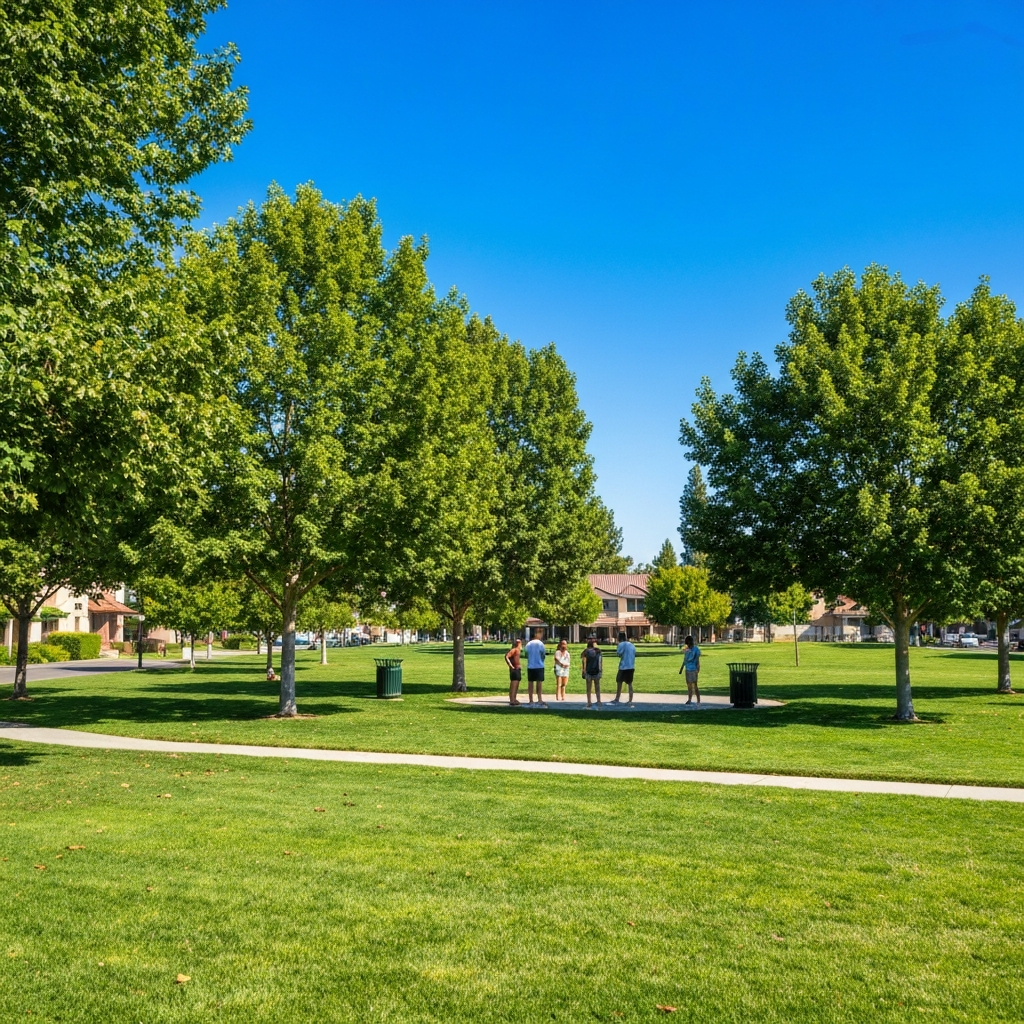
Elk Grove, California, experiences a hot-summer Mediterranean climate, characterized by hot, dry summers and mild, wet winters. This climate pattern influences various aspects of daily life, from outdoor activities to environmental management.
Seasonal Weather Patterns
Summer
Summers in Elk Grove are typically hot and dry, with average high temperatures around 93°F (34°C). Heatwaves can push temperatures above 100°F (38°C), particularly in July and August. The city enjoys approximately 266 sunny days per year, making it ideal for outdoor activities during this season. However, residents should be mindful of the increased risk of heat-related illnesses and take necessary precautions.
Winter
Winters are mild, with average low temperatures around 39°F (4°C). Rainfall is concentrated between November and March, averaging 18–20 inches (457–508 mm) annually. Snowfall is rare, and when it does occur, it is typically minimal. These conditions contribute to the region’s lush greenery during the winter months.
Environmental Initiatives
Grazing Management Program
To mitigate wildfire risks and manage vegetation, Elk Grove has implemented a Grazing Management Program. This initiative employs livestock, such as goats and sheep, to naturally control weed growth in open spaces. The program offers several environmental benefits, including reduced soil erosion, improved air and water quality, and enhanced habitats for local wildlife. Residents can track the grazing locations through an interactive map provided by the city.
Water Conservation Efforts
In response to ongoing drought conditions, Elk Grove has enacted a Water Conservation Plan under Stage 2 drought restrictions. This plan includes measures such as reducing irrigation for parks and street landscaping by 20%. The city prioritizes water use based on safety, type of use, and the value of the asset, focusing on preserving trees and high-use recreational areas. Advanced irrigation control systems that monitor real-time weather conditions are utilized to prevent over-watering.
Climate Change Considerations
Elk Grove faces increased risks from climate change-related hazards, including wildfires, heatwaves, and flooding. Approximately 65% of buildings in the city are at risk of wildfire, with the risk level classified as high. Additionally, about 29% of buildings are at risk of flooding, with a significant risk level. Residents are encouraged to stay informed about these risks and take proactive measures to protect their properties and health.
Understanding Elk Grove’s climate and participating in local environmental initiatives can help residents adapt to seasonal changes and contribute to the community’s sustainability efforts.