

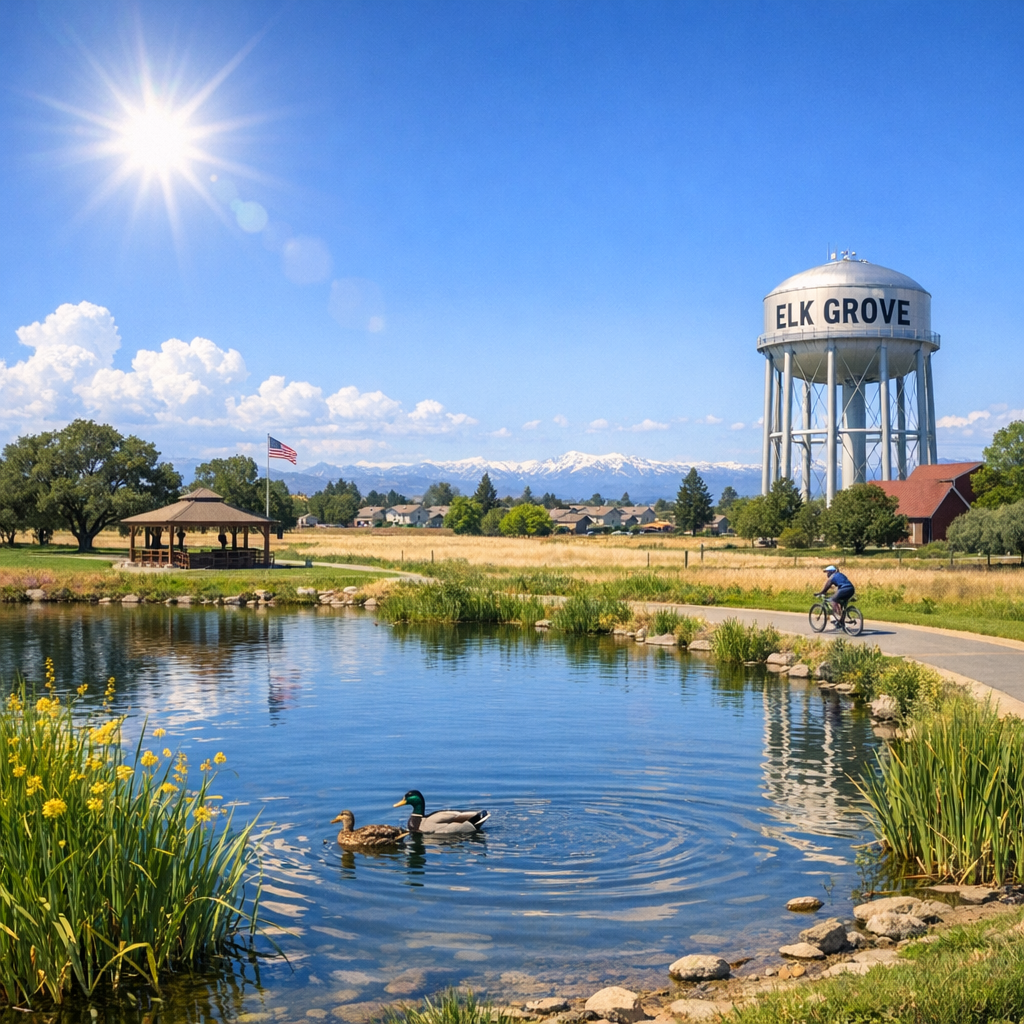
Elk Grove, California, experiences a hot-summer Mediterranean climate, characterized by hot, dry summers and cool, wet winters. This climate pattern influences various aspects of daily life, from outdoor activities to agricultural practices.
Seasonal Temperature Patterns
Throughout the year, temperatures in Elk Grove vary significantly. The hot season spans approximately 3.7 months, from early June to late September, with average daily high temperatures exceeding 85°F. July stands out as the warmest month, boasting an average high of 93°F and a low of 59°F. Conversely, the cool season lasts about 2.8 months, from late November to mid-February, with average daily highs below 61°F. January is typically the coldest month, featuring an average low of 39°F and a high of 55°F.
Precipitation and Humidity
Elk Grove receives an average annual precipitation of approximately 18.7 inches, primarily during the winter months. December is often the wettest month, averaging around 2.68 inches of rainfall. In contrast, the summer months, particularly July and August, are notably dry, each averaging only 0.04 inches of rainfall. Humidity levels fluctuate throughout the year, with March being the most humid month at 75% and September the least humid at 44%.
Environmental Considerations
The city’s climate has direct implications for water usage and conservation efforts. For instance, a plan to irrigate Elk Grove’s parks and landscaping with treated sewage water faced setbacks due to rising costs, highlighting the challenges in implementing sustainable water practices. Additionally, residents should be aware of the quality of their drinking water. Recent reports indicate that Elk Grove’s tap water has significant quality concerns, with certain contaminants detected above EPA limits. While the city relies on groundwater sources, naturally occurring minerals and potential contaminants necessitate regular monitoring and, if necessary, the use of appropriate filtration systems.
Understanding Elk Grove’s climate is essential for residents and visitors alike. By staying informed about seasonal patterns and environmental factors, individuals can make informed decisions regarding outdoor activities, water usage, and overall health and safety.